First-Day Readiness: A Montessori Morning Routine Checklist for Parents
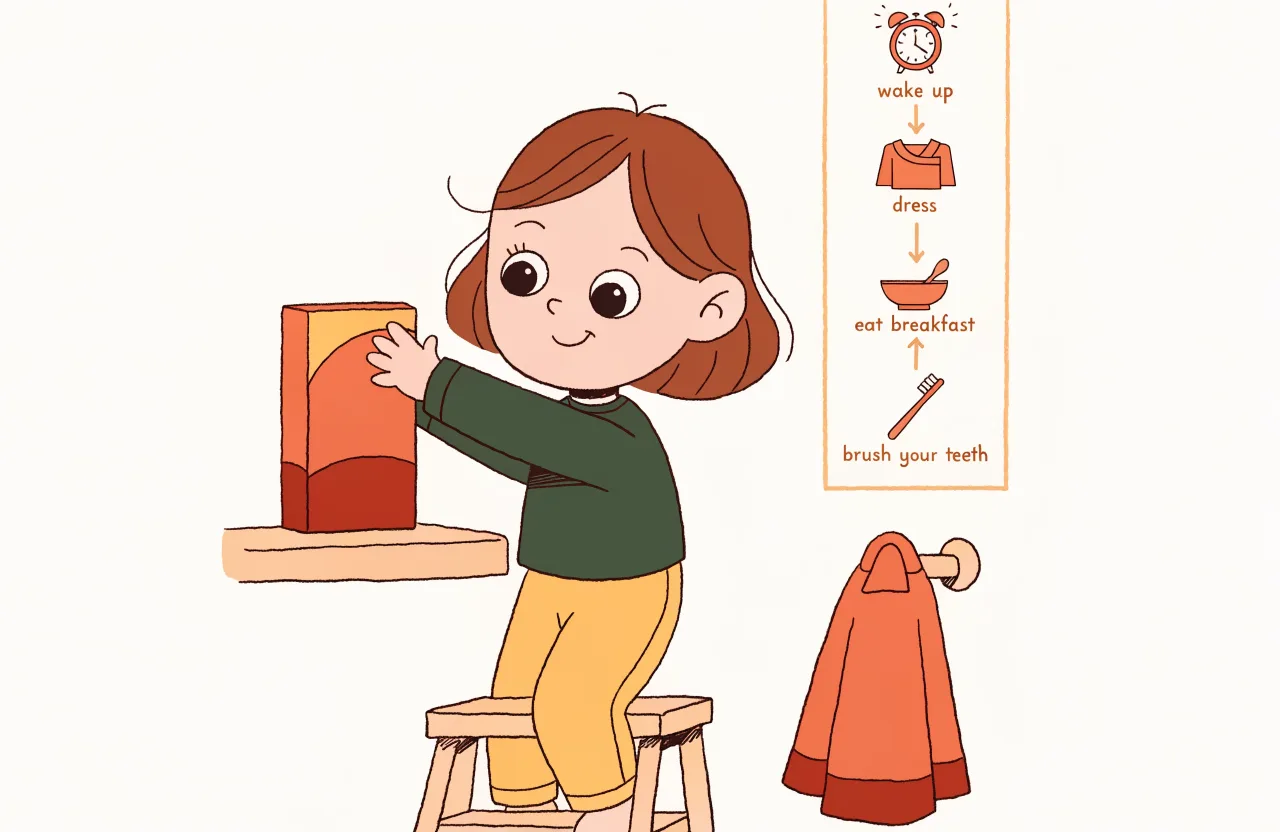
Free to print and use at home or in one classroom.
The Night Before Is Part of the Morning
Here's the thing nobody tells you: a calm Montessori morning doesn't start when the alarm goes off. It starts the night before, when you set up an environment that lets your child do things for himself instead of waiting for you to do them for him.
The goal isn't a silent, zen household where everyone glides around in linen. The goal is fewer moments where you're doing something a four- or five-year-old is fully capable of doing himself — because every time you take over, you're quietly telling him he can't. And on the morning of the first day of school, when nerves are already high, that message lands harder than usual.
This guide walks you through building a morning routine your child can actually run, with just enough scaffolding from you to keep it real. Not a fantasy morning. A doable one.
What You'll Need
Nothing fancy. This is about arrangement, not equipment.
- A low hook or two, at your child's shoulder height, for tomorrow's outfit
- A small stool or step so he can reach the sink, the counter, the cereal shelf
- A short list of morning steps, drawn as simple pictures or icons (you can sketch stick figures — this isn't an art project)
- A designated low shelf or basket in the kitchen with breakfast items he's allowed to handle: a small pitcher, a cereal container he can pour from, a plate, a cup
- Clothes chosen and laid out — by him, the night before, from a limited set of options you've already approved
That's it. You already own all of this or can improvise it in twenty minutes.
Setting It Up the Night Before
Montessori classrooms run smoothly because the environment does a lot of the work before the child even walks in. You can build a scaled-down version of that at home in one evening.
Lay two or three outfit choices on the bed or hang them on the low hook — not the whole closet, just enough options that he feels ownership without spiraling into decision paralysis. This is what Montessori calls freedom within limits: real choice, but inside a frame small enough that a five-year-old can actually manage it. Let him pick. If the shirt doesn't match the pants, let it go. Mismatched socks have never derailed anyone's education.
In the kitchen, set up a small breakfast station at his height. This might mean moving the cereal into a container light enough for him to lift, pouring milk into a small pitcher he can manage without a flood, and putting his bowl and spoon somewhere he can reach without asking. If spilling is a real concern, put a small towel right there on the shelf, folded, so cleanup is part of the routine, not a crisis. That towel is doing real developmental work — it's what Montessori calls control of error, a built-in way for a child to notice a mistake and fix it himself, without you swooping in as the correction.
Make the visual schedule together if he's old enough to help draw it. Five or six steps, no more: wake up, get dressed, eat breakfast, brush teeth, shoes and backpack, out the door. Tape it somewhere he'll actually see it — eye level, not on the fridge above his head.
The Morning Itself
Here's where the temptation to take over is strongest, especially on a big first day when you're anxious too. Resist it. Your job this morning is to be present, not efficient.
- Wake him a little earlier than you think you need to. Rushing is the enemy of independence — a child who's being hurried will let you dress him just to save time, and you'll let him, because you're also running late. Buy the extra fifteen minutes.
- Let him check the schedule himself before you say anything. If he can't read yet, the pictures do the work. Ask "what's first?" instead of announcing it.
- Step back during dressing. Offer help only if he asks or if you can see real frustration building — a stuck zipper, a shirt on backward for the third time. Even then, offer the smallest possible assist: "Want me to hold the bottom while you pull?" rather than doing it for him.
- At breakfast, let him pour, even though he will spill. This is the actual lesson, not an unfortunate side effect. A child who pours his own juice is building the same coordination and confidence he'll need in a classroom in an hour. Hand him the towel. Let him wipe it up. Move on.
- Build in a two-minute pause before shoes and backpack — not a rushed grab at the door, but a moment to check the schedule one more time and feel like he completed something. This tiny closing ritual matters more than it looks like it should.
- Let him carry his own backpack to the car or the bus stop, even if it means he'll drop it once. Independence isn't clean. It's a kid dropping a backpack and picking it back up.
If It Falls Apart Anyway
Some mornings, none of this works, and the first day of school is a prime candidate. He refuses to pick an outfit. He melts down over the cereal. He wants you to do everything, including things he's done independently for months. This is not a sign that the routine failed or that you set it up wrong.
Nerves push children backward. A child facing something new and a little scary will often reach for the comfort of being taken care of, even when he's capable of more. You'll see this happen in Montessori classrooms during the first weeks of every school year — children who've hung up their own coats for months suddenly "forget" how, or ask to be carried to the rug they've walked to independently since September. It's not regression in the worrying sense. It's a nervous system asking for reassurance before it asks for independence.
So if the routine collapses, don't force it. Do the shirt buttons for him if he's asking with real distress in his voice, not just mild reluctance. Sit with him for an extra minute instead of pushing the schedule. You can rebuild the routine tomorrow, when the newness has worn off a little and his nervous system isn't working so hard. One rough morning doesn't undo the ones you set up carefully. It just means today, he needed you more than he needed the pitcher.
Why This Actually Matters
This isn't a productivity hack for getting out the door faster. A child who dresses himself, pours his own cereal, and checks his own schedule is practicing trust in his own hands and his own judgment — trust that doesn't arrive because you told him he's capable, but because he did something hard this morning and it worked.
That matters specifically on a first day. A child who already knows he can manage his own body and his own small tasks walks into a new classroom with one less thing to be anxious about. He's not wondering whether he can keep up. He already handled breakfast by himself an hour ago. The spilled milk and the extra six minutes for a coat zipper are small costs that buy something real: a kid who treats competence as ordinary, not something adults hand out on approval.
Where This Leads
Notice how much of what made this morning work had nothing to do with instructions and everything to do with arrangement — the pitcher small enough to lift, the hook at shoulder height, the towel already sitting there so a spill was a next step instead of a disaster. You didn't teach him to pour milk carefully tonight. You built a shelf where pouring carefully was the only option available to him.
That's the whole trick behind every Montessori classroom, scaled up: a trained guide spends hours deciding exactly how far a chair sits from a table, exactly which materials go at exactly which height, because the room itself does half the teaching before a lesson ever begins. Your kitchen counter this evening was a small, honest version of that same work — and it's the kind of thinking that extends into every corner of a home, not just the breakfast shelf.
If you found yourself wondering, while setting up that shelf, what else in your house might be quietly working against your child's independence instead of for it — the bathroom sink, the coat closet, the bookshelf he can't quite reach — that's the question ThatSoMontessori spends most of its time answering, room by room.